
nfpa 13 pdf
Category : PDF
NFPA 13 PDF: A Comprehensive Guide (Updated April 30, 2026)
NFPA 13’s latest PDF edition, updated today, April 30, 2026, details sprinkler system design, installation, testing, and seismic protection requirements for fire safety.
NFPA 13, the cornerstone standard for sprinkler system installation, is crucial for life safety and property protection. This document, available as a PDF, provides comprehensive guidelines for designing, installing, and maintaining automatic fire sprinkler systems. It’s regularly updated – the latest edition being current as of April 30, 2026 – to reflect evolving fire protection technologies and best practices.
The standard covers a broad spectrum of applications, from warehouses and high-hazard occupancies to residential dwellings (under NFPA 13D). Understanding NFPA 13 is vital for fire protection engineers, installers, authorities having jurisdiction, and anyone involved in building safety. Accessing the official PDF ensures you have the most accurate and up-to-date information for compliant and effective fire sprinkler systems.
What is NFPA 13?
NFPA 13, formally known as the “Standard for the Installation of Sprinkler Systems,” is a widely adopted code published by the National Fire Protection Association. The PDF version details requirements for automatic sprinkler system design, installation, acceptance testing, and ongoing maintenance. It’s a critical resource for ensuring effective fire suppression in a variety of building types.
The standard addresses everything from sprinkler head placement and pipe sizing to water supply requirements and seismic bracing. It’s continually revised, with the 2025 edition introducing changes to concrete tee construction and ESFR/CMSA sprinkler design pressures. Obtaining the official NFPA 13 PDF guarantees access to these crucial updates and ensures compliance with current fire safety regulations.
The Importance of the NFPA 13 PDF
Accessing the NFPA 13 PDF is paramount for fire protection professionals, authorities having jurisdiction, and anyone involved in building safety. The document provides a comprehensive, legally recognized standard for sprinkler system installation, minimizing fire risks and protecting lives and property.
Staying current with the latest edition, like the updated version as of April 30, 2026, is vital due to ongoing revisions addressing new technologies and construction methods. Compliance with NFPA 13 is often mandated by the International Building Code (IBC), particularly for occupancies like Group H and others (M, R-1, R-2, etc.). Utilizing the PDF ensures adherence to these codes and facilitates successful acceptance testing.

Key Areas Covered in NFPA 13
NFPA 13 comprehensively covers automatic sprinkler design, installation protocols, acceptance testing procedures, and crucial aspects like seismic protection and underground piping systems.
Automatic Sprinkler System Design
Automatic sprinkler system design, as detailed within the NFPA 13 PDF, is a complex process demanding meticulous attention to detail. The standard outlines requirements for hydraulic calculations, ensuring adequate water flow and pressure to control or suppress fires effectively.

Designers must consider hazard classifications, occupancy types, and building construction features. NFPA 13 specifies sprinkler spacing, type selection (standard spray, ESFR, CMSA), and placement to achieve optimal fire protection. The document also addresses the design of water supply systems, including pumps, tanks, and piping networks, ensuring reliable water delivery during a fire event.
Furthermore, the PDF provides guidance on system components like valves, fittings, and gauges, all crucial for a properly functioning and compliant sprinkler system.

Installation Requirements
The NFPA 13 PDF meticulously details installation requirements for automatic sprinkler systems, ensuring reliability and adherence to safety standards. Proper pipe support and bracing are critical, especially in seismic zones, as outlined in the document.
NFPA 13 specifies acceptable materials for piping, fittings, and hangers, emphasizing compatibility and corrosion resistance. Detailed instructions cover the correct installation of sprinkler heads, valves, and other components, preventing leaks and malfunctions.
The PDF also addresses requirements for protecting piping from physical damage and ensuring adequate access for inspection, testing, and maintenance. Following these guidelines guarantees a robust and dependable fire suppression system, safeguarding lives and property.
Acceptance Testing
The NFPA 13 PDF comprehensively outlines acceptance testing procedures for newly installed automatic sprinkler systems. These tests verify the system’s functionality and compliance with design specifications before being placed into service.
Hydrostatic testing is a crucial step, ensuring the piping can withstand the maximum expected pressure. A thorough inspection of all components, including sprinkler heads, valves, and alarms, is mandatory.
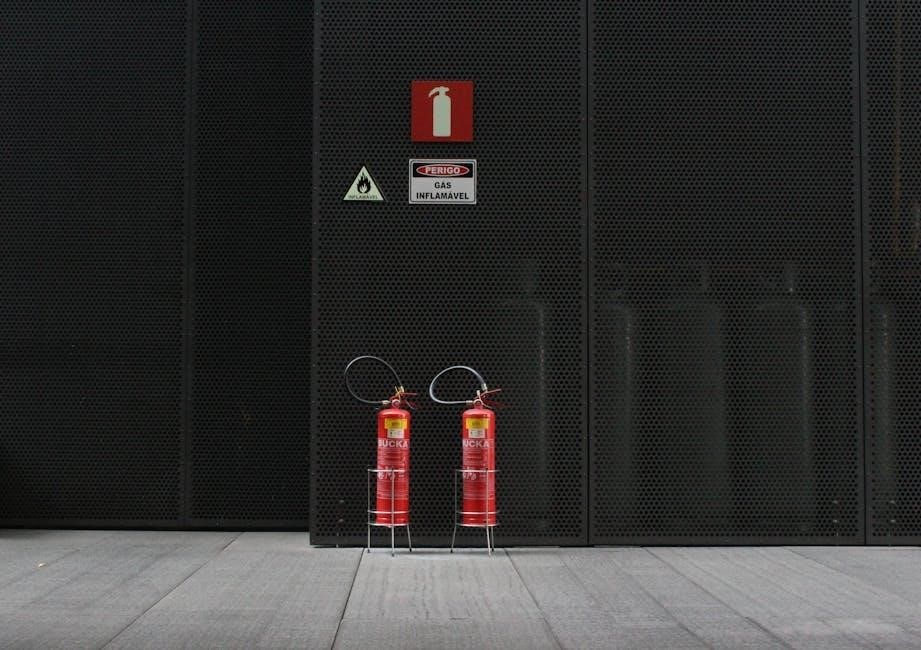
Flow tests confirm adequate water supply and distribution throughout the system. The PDF details specific testing protocols and acceptance criteria, guaranteeing a reliable and effective fire protection system. Proper documentation of all test results is essential for maintaining compliance and ensuring future system integrity.

Specific System Types & Applications
NFPA 13’s PDF details various sprinkler systems like ESFR, CMSA, and residential systems (NFPA 13D), outlining their specific design and application guidelines.
ESFR and CMSA Sprinklers
The NFPA 13 PDF provides comprehensive guidance on Early Suppression Fast Response (ESFR) and Control Mode Specific Application (CMSA) sprinklers, crucial for high-challenge fire scenarios.
According to recent updates, design pressure for these systems is determined by the hazard below obstructions, treating the obstruction’s bottom as the ceiling. This simplifies calculations and ensures effective suppression. Notably, supplemental sprinklers do not require balancing with ceiling sprinklers, streamlining the design process.
The document details appropriate applications, installation criteria, and spacing requirements for both ESFR and CMSA systems, ensuring optimal performance and life safety. Understanding these specifics, as outlined in the PDF, is vital for compliant and effective fire protection.
Design Pressure Considerations for ESFR/CMSA
The NFPA 13 PDF clarifies that determining design pressure for ESFR and CMSA sprinklers centers on the hazard present beneath any obstructions. This is a key principle for effective fire suppression in storage facilities and similar environments.
Crucially, the bottom of the obstruction is treated functionally as the ceiling for design purposes. This approach simplifies calculations while maintaining a high level of safety. The document details how to accurately assess the hazard level and select the appropriate design pressure based on these factors.
Proper pressure calculation, as detailed in the PDF, is paramount for ensuring these specialized sprinkler systems operate as intended, delivering rapid and reliable fire control.
Supplemental Sprinkler Balancing
According to the NFPA 13 PDF, a significant update in the 2025 edition addresses supplemental sprinkler balancing requirements for ESFR and CMSA systems. The document now explicitly states that supplemental sprinklers are not required to be hydraulically balanced with ceiling sprinklers.
This change streamlines the design and installation process, reducing complexity and potential costs without compromising fire protection effectiveness. The PDF provides detailed guidance on how to appropriately design these systems, ensuring adequate water distribution to all sprinkler heads.
This clarification simplifies compliance and offers greater flexibility for engineers and installers working with these specialized sprinkler configurations.
Fire Sprinklers in the International Building Code (IBC)

The NFPA 13 PDF serves as a crucial reference point for fire sprinkler requirements outlined within the International Building Code (IBC). The IBC, specifically section 1020.4, references NFPA 13 for complete sprinkler system specifications.
Complete sprinkler systems are mandated in occupancy groups like H (high-hazard), as detailed in IBC 903.2.5. The PDF clarifies requirements for occupancies M, R-1, R-2, R-4, S, and U, guiding designers through hazard group classifications.
Notably, Hazard Group II considerations are addressed, particularly concerning corridor protection utilizing a single row of sprinklers, as detailed within the referenced documentation.
Sprinkler Requirements by Occupancy Group (M, R-1, R-2, R-4, S, U)
The NFPA 13 PDF meticulously details sprinkler system requirements tailored to various occupancy groups as defined by the IBC. For Mercantile (M) occupancies, the PDF outlines specific design criteria based on commodity classification and storage height.
Residential occupancies – R-1 (hotels/motels), R-2 (apartment buildings), and R-4 (residential care facilities) – each have unique sprinkler placement and density requirements detailed within the document.
Storage (S) and Use (U) occupancies necessitate careful consideration of hazard levels, influencing sprinkler selection and system design, all comprehensively covered in the NFPA 13 PDF.
Hazard Group II Considerations
The NFPA 13 PDF provides extensive guidance on designing sprinkler systems for Hazard Group II occupancies, characterized by moderate fire hazards. These areas typically involve storage or processing of combustible materials with moderate quantities of flammable liquids.
The document details specific density/area curves and water supply requirements to effectively control fires within these spaces; Corridor protection, often utilizing a single row of sprinklers, is addressed, ensuring adequate coverage and response times.
Careful attention is given to sprinkler spacing and placement to account for potential obstructions and ensure reliable fire suppression, as outlined in the NFPA 13 standard.
Residential Fire Sprinkler Systems (NFPA 13D)
The NFPA 13D PDF, a crucial component of the broader NFPA 13 standard, focuses specifically on the installation of automatic fire sprinkler systems in residential settings. This includes one- and two-family dwellings, as well as manufactured homes, ensuring life safety within these structures.
Northstar Fire Department guidelines emphasize adherence to the latest California-adopted versions of NFPA 13D, alongside local regulations. The document details specific requirements for sprinkler placement, pipe sizing, and water supply to effectively suppress fires in residential environments.
It provides a simplified approach compared to NFPA 13, tailored to the unique characteristics of residential construction.
One- and Two-Family Dwellings
The NFPA 13D PDF provides detailed guidance for sprinkler system installation in one- and two-family homes. Northstar Fire Department’s guidelines mandate compliance with the most current California-adopted NFPA 13D standards for these dwellings, ensuring robust fire protection.
This section of the PDF outlines specific requirements for sprinkler head placement, considering factors like ceiling height, room dimensions, and potential obstructions. It also addresses appropriate pipe sizing and water supply demands to guarantee effective fire suppression.
The document aims to minimize water damage while maximizing life safety in residential settings, offering a balance between protection and practicality.
Manufactured Homes
The NFPA 13D PDF extends its coverage to manufactured homes, recognizing their unique construction and fire risks. Northstar Fire Department’s guidelines explicitly include these structures within the scope of required sprinkler systems, aligning with current California regulations.
This section details specific installation adaptations necessary for manufactured homes, accounting for variations in floor plans, ceiling constructions, and available space. It addresses securing sprinkler piping to withstand movement and ensuring proper water distribution throughout the home.
The PDF emphasizes the importance of qualified installers familiar with the nuances of manufactured home sprinkler systems, promoting both safety and code compliance.

Recent Updates & Changes
The 2025 NFPA 13 PDF introduces revisions, including concrete tee construction limits and ESFR/CMSA sprinkler design pressure clarifications for enhanced fire protection.
Changes in the 2025 Edition of NFPA 13
The 2025 edition of NFPA 13 brings significant updates to sprinkler system standards, impacting design and installation practices. Notably, revisions address Early Suppression Fast Response (ESFR) and Control Mode Specific Application (CMSA) sprinklers, clarifying design pressure calculations based on hazard levels and obstruction heights.
Previously, supplemental sprinklers required balancing with ceiling sprinklers, but this is no longer mandated. A key change concerns concrete tee construction; the 2025 edition now limits the depth of concrete tees in obstructed construction, requiring sprinkler deflectors to be positioned at least one inch below the bottom plane of the tee. Prior editions lacked this depth restriction.
These updates, detailed within the latest NFPA 13 PDF, aim to improve system reliability and address evolving fire safety challenges, ensuring more effective protection across various occupancy types.
Concrete Tee Construction (10.2.7.1.2)
Section 10.2.7.1.2 of NFPA 13 underwent a crucial revision in the 2025 edition, specifically addressing concrete tee construction within obstructed spaces. Previous versions of the standard permitted sprinkler deflectors to be located with minimal restriction relative to the concrete tee’s underside.
However, the updated code now introduces a definitive limit to the permissible depth of concrete tee construction. Sprinkler deflectors must now be positioned at least one inch below the bottom plane of the concrete tee structure. This change aims to enhance sprinkler effectiveness by preventing obstruction and ensuring proper spray distribution.
This modification, detailed in the NFPA 13 PDF, is vital for designers and installers working with concrete tee structures, ensuring compliance and optimal fire protection.
NFPA 13: Seismic Protection
The NFPA 13 PDF comprehensively addresses seismic protection for automatic sprinkler systems, recognizing the critical need for functionality during and after earthquake events. This section details requirements for designing and installing systems capable of withstanding seismic forces, minimizing damage and maintaining fire suppression capabilities.
The standard outlines bracing requirements for piping, sprinkler heads, and other components, ensuring they remain securely in place during ground motion. It specifies acceptable methods for calculating seismic loads and provides guidance on selecting appropriate materials and connection details.
Detailed within the PDF, these provisions are essential for safeguarding lives and property in seismically active regions, ensuring reliable fire protection even under extreme conditions.
Underground Piping Systems
The NFPA 13 PDF dedicates significant attention to the specifics of underground fire sprinkler piping systems, crucial for water supply to many installations. It details requirements for pipe materials, corrosion protection, and burial depth, ensuring long-term reliability and preventing leaks or failures.
This section covers proper trenching and backfilling procedures, alongside stipulations for supporting and anchoring the piping to prevent movement or stress. The document also addresses hydrostatic testing protocols to verify the integrity of the system before commissioning.
Detailed guidance within the PDF ensures these often-hidden components function effectively when needed, contributing to overall fire protection system performance.

Accessing and Utilizing the NFPA 13 PDF
The official NFPA 13 PDF is available for purchase through the NFPA website and Amazon, offering detailed guidance on sprinkler system standards.

Where to Obtain the Official NFPA 13 PDF
Obtaining the official NFPA 13 PDF ensures access to the most current and accurate fire sprinkler system standards. The primary source is the National Fire Protection Association (NFPA) website, where digital versions are available for direct purchase.
Alternatively, major online booksellers like Amazon.com also offer the NFPA 13 PDF for sale. Purchasing through these platforms provides convenient access and often includes options for digital readers. Be sure to verify the edition year – currently updated to reflect changes as of April 30, 2026 – to ensure compliance with the latest regulations.
Avoid unofficial sources, as they may contain outdated or inaccurate information. Always prioritize obtaining the document directly from NFPA or a trusted retailer to guarantee the integrity of the standard.
Understanding the Document Structure
The NFPA 13 PDF is meticulously structured to guide users through complex fire sprinkler system requirements. It begins with fundamental principles, progressing to detailed design and installation specifications. Key sections cover automatic sprinkler system design, encompassing hazard classifications and hydraulic calculations.
Separate chapters address installation requirements, acceptance testing procedures, and specific system types like ESFR and CMSA sprinklers. The document also integrates relevant sections from the International Building Code (IBC), clarifying sprinkler needs based on occupancy groups (M, R-1, R-2, etc.).
Furthermore, it includes dedicated sections on residential systems (NFPA 13D), recent updates, seismic protection, and underground piping, ensuring a comprehensive understanding of all aspects of fire sprinkler systems.